
Time, the only Constant
on planning the rest of my life
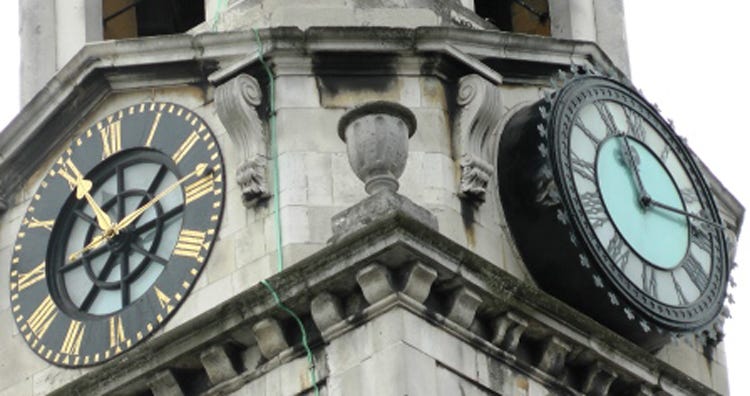
We are approaching the final one degree arc of the sixty-eighth rotation of this Earth round the Sun since the fructus ex ventris mater mihi brought forth this now-aging, once-fresh bundle of flesh that is me; my body and soul. Yes, tomorrow (as I type) will be my 68th birthday. I will be reminded again of the countdown that began in a tarred wooden house, many hours and impossibly long miles from any local maternity care, which will come to an end sometime probably within the next five to fifteen solar orbits. I am aiming ad multos annos at 70 and hoping for 80; how biblical.
I have faced death on several occasions. I am not afraid. This is not the passivity of a know-it-all atheist who hums a merry tune as he launches blindly off the cliff edge that was his life, to face unarmed the one sole truly great unknown. As Pascal said, a theist has the eternal hope of either heaven or the spectre of nothing awaiting him, whereas the atheist faces the hope of nothingness or the eternal prospect of, to be blunt, hell. It’s a poor choice for the unbeliever. I’ll take the higher possible return of the all-or-nothing bet over risking the everlasting flames.
It was the encounter in 1982 with God (yes, Him) in a room in the Y Hotel in Tottenham Court in London that alerted me to the existence of existence beyond my existence. My life then fell apart, falling like a set of nine-pins during an earthquake. It took me another half of a lunar orbit to put a face to this unexpected guest, Jesus. Despite my attempts to fob off the Visitor as a Pagan, Hindu or Islamic god. He stubbornly determined to be simply who He was and is and is to come, the very strange God of Adam, Noah, Abraham, Miriam of Nazareth, Saul of Tarsus, David, Esther and so many others who have now exited our passing earthliness.
The acceptance of this new (to me) story, about the apparently rather ordinary day-worker of creative hand-crafts, born into a real place and at a real time, who was a man of mysterious sayings, startling gifts, and a death-sentence of words which challenged the stable order of human misery. He said and believed that there was a better way - that he was himself the better way personified. He offered another Pascalian choice: drop what you are doing and follow me, and I will show you God who made and planned everything, or remain unguided, blind, deaf, dumb, crippled, starving, homeless, friendless and worse.
His way was not the way of the common ancient cults: appease the supernatural powers or they will batter the living daylights out of you. Or of the Mosaic rules: scrolls filled with designs for a dance so complex that no-one could ever appease this god, Ya. (to be fair to Ya, I don’t think that this is what he had intended, or hoped.) Or of the Buddha, who offered an introspective reflection on the misery and thralldom of common life, a meditative way, almost non-living, detached from life’s horrors, by severing the link with human reality. Nor did he ever suggest the way of Mohammad, by sensuality of existence so absorbed in the orgasmic experiences of this world that the next world is just a dopamine fix of unbearable potency.
Yet, the way of Jesus is not an unfamiliar one to men and women of this hyper-real world we still live in today. Indeed, if he was so different then we would have no reference points to make sense of him. The world echoes with strange hopes of a better world that can be imagined, if not createable. This imaginary hopefulness of a brighter future drives men mad with desire. My (and, probably your) ancestors threw in every thing they possessed - life, hearth and time - to escape from the nullities of dull life.
Mine left the cropless slopes of the Norwegian fjords, crossing dangerous north Atlantic seas to grab land in Britain, North America, and up waters of the Rhine and Danube to the black earth around the river Don. They fled starvation of failed harvests to work in the squalor of Victorian cities. They stepped onto frail ships to go to unknown lands where nobody, they hoped, wanted to kill, rape or enslave them, their wife or children.
Parents saved enough money to put a 12-year old son, alone, onto a ship, trusting that whatever happened there was a greater hope this way than would ever exist for them within any human life-time. I look back and see the people from the past whose vision came true in my lifetime, decades or more after they acted in unfounded trust and hope. But trust and hope in what? In something hidden inside, like a grain of sand in an oyster. This foreknowledge - if that is what it was - was not made by them; it was already there, and still today drives millions from Africa and Asia towards the greater prospects which they believe can be found in Europe and America.
I doubt that ants or bees sit in their downtime at the end of another day’s long labouring shift, dreaming of - as the movie put it - insectopia. Nor do higher life-forms like elephants or apes, congress to discuss whether a more equitable society can be formed by ending the cult of the dominant male or the role of the female in raising their young. I watched a nature documentary where cheeky young gorillas poked big males with sticks, they get chased and, if caught, battered by their huge fathers. There are no signs in the gorilla creche telling every ape to be polite, caring and inclusive.
We all want better than we have. And, if we hit that elusive vein of pure gold, becoming a Musk, Ellison, Rockefeller or Carnegie, no-one feels so satisfied that they can simply stop. At least Buddhism has a tangible, even if elusive, target. But, to become a trillionaire like Elon Musk, or the richest man in the cemetery like Steve Jobs, does not satisfy. The same goes for human power; as a former British Prime Minister said: all political careers end in failure. There is a British tradition that no PM leaves 10 Downing Street by the front door, where all the world’s press scramble for the best photo op; only by the back door, through the garden, and out the gate; unwatched; forgotten.
If life has been planned then it can appear to be a cruel joke. We desire better and more, but the champagne we desire is salted, only increasing the thirst. And, to return to where I started, each day we get a tad older, with the unscheduled visitor who will, one day, come for each one of us. As I said, death does not frighten me. I have seen him more than once in times of illness and ordinaryness. Yes, he has frightened me; One day during her childhood my eldest daughter ran to a cliff edge and leapt onto a jutting out rock. Long after this I was haunted by her ‘death’. The loss of a child can be the most destructive event imaginable. Whither your wordy rational dreams and philosophies then?
But, when death bumps into you, staring from these blackest of eye sockets, his morbid breath exhaling into your lungs, then we cease to be our triumphant selves, watching the world cheering us on, for we are not alone in our chariot, beside us stands a base slave who says, “Remember: you are only a mortal.” We too shall die, even in the midst of our dreams, hopes and failures. Then, we are buried and rot, or burn and then blown away in the passing, insensitive wind. For we are physically just some dust and dirt.
Forty-four years ago I crossed the Rubicon, leaving behind atheism and embracing Christ. I suspect this shows in the text thus far. No atheist would talk of the horrors of real death, or the unsatisfactory nature of every death. Some will respond that either (i) you can be sure of eternal life now, or (ii) you are pissing in the wind. Both, in my thoughts, are fanciful thinking. Surety of the future is not supported by the breadth of witnesses who we read in scripture, least of all Jesus Christ (see Matthew’s 25.21-46) Or, am I a wind-pisser? Ultimately, we all are, atheists and theists; death is the only absolute reality for each of us. What comes next is not a debating game; it will come to each of us in its own good time. Soon.
If you were thinking that I am writing this to convert you to a follower of Christ, chance would be a fine thing. I’m not really, but I do warmly recommend it. No, I am emerging back into the light of a long quietness to sit down and do my mixed Protestant / Catholic bit: to read the Bible, ponder on the so-what’s, and check the words of the ancient wise ones. Who are they? The mainstream of Christianity’s leading thinkers from AD Zero onwards. I admit, like every good social scientist (ed: John nods towards Prof Hounswell at Edinburgh University) to a strong set of biases. Heck - at least I am being honest with you, dear reader!
One of my strongest spiritual guides these days is the evangelist, Robert Barron, an American Catholic bishop. He proposes the use of five keys to safely unlock scripture:
Before you read, ask yourself what the genre of the book is. Is it, for example, history, poetry, mythology, hagiography, wisdom, etc.;
Remember, the Bible tells just one story: redemption;
Given that Jesus declared the core of his teaching to be love, then look for what the text says of the love of God and for God, of Man and for Man;
Remember, in all of scripture there is wheat, and there is chaff;
At all times, look for and to Christ.
And so, I will sit me down with the Word on Fire Bible (NRSVCE). I got the first volume on the Gospels on a recent birthday. My pal Ed gave me his NT Letters/Acts/Revelation volume, and his Torah volume. I’ll keep an eye on eBay for the last two volumes covering the promised land, exile and return, since I don’t think I will need these until autumn or winter time at the earliest.
Here in the words of Moshé I intend to make a start on - where else? - Genesis, chapter one, verse one. How far will I make it before yon grey-hoodie man returns for one last time, to call my work here to an end? Only God knows. I am comfortable with that. At least he shall find me busy when he turns off the power.